
Nutronicaa / Rapid freezing systems
Blast freezers.
A better start
for every batch.
Bring a dedicated freezing step to your food preparation, product development and pre-freezing workflow. Explore Nutronicaa blast freezers, manufactured in Ambala, India.

Find the right chamber
Choose the space.
Plan the load.
Start with chamber volume and tray positions, then match them to the product and the batch you actually want to freeze.
100litres
A smaller chamber option for product development and planned smaller runs.
Discuss this size200litres
A mid-range chamber option when organising regular tray-based batches.
Discuss this size300litres
A larger chamber option for applications needing more chamber space and tray positions.
Discuss this sizeLitres describe nominal chamber volume, not a guaranteed kg load or freezing rate. Tray dimensions, product depth, spacing, starting temperature and the required product endpoint determine the practical batch. Confirm current specifications before ordering.

A closer look at the equipment
A closer look.
Inside the cabinet.
A closer view of a Nutronicaa blast freezer, prepared from our product photographs. See the chamber access, shelf arrangement and circulation fans in the pictured configuration.
- Chamber accessOuter and inner doors shown open for a clear view of the working space.
- Shelf arrangementWire shelves and runners support tray-based loading in the pictured machine.
- Circulation & controlRear circulation fans and a front-mounted digital controller form part of the freezing setup.
A freezing step, with a purpose
Made around
what comes next.
Freezing for a recipe, a production plan or a freeze-drying run starts with understanding the product.
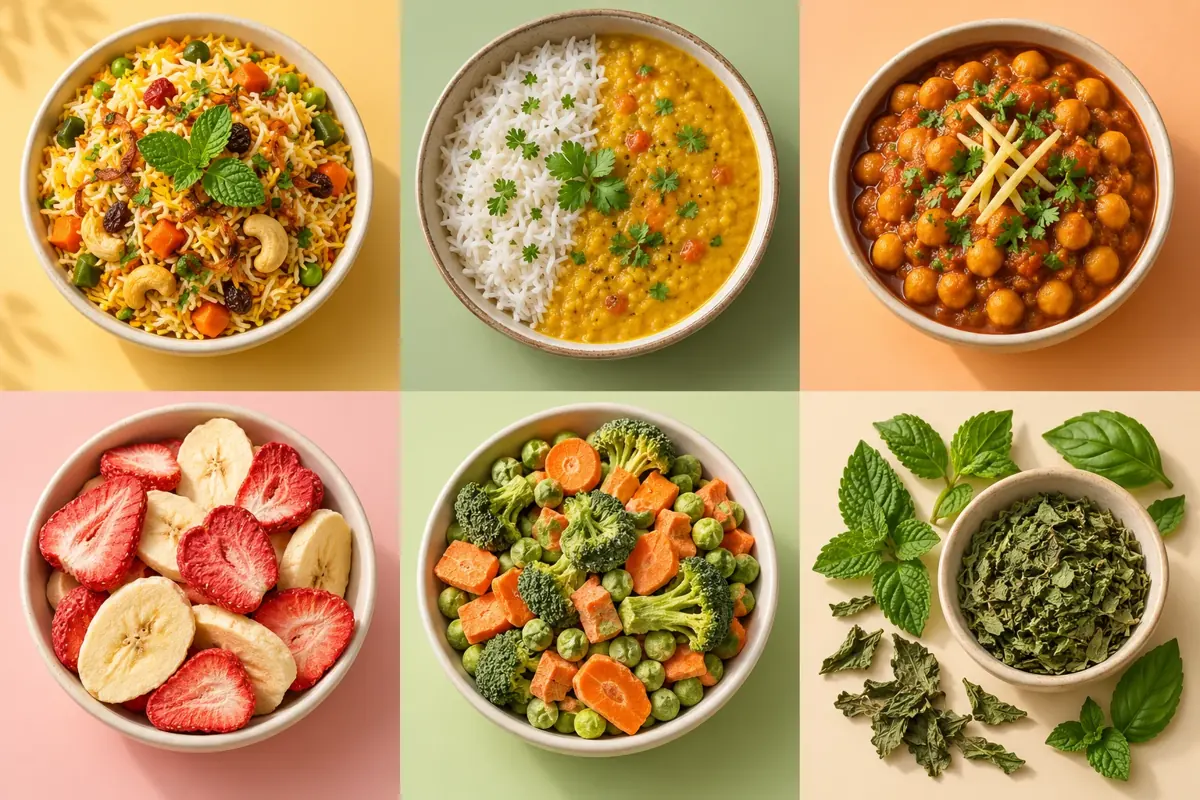
Fruits, vegetables
& food ingredients
Plan portion size, preparation and tray loading around the next processing stage, frozen supply or product trial.

Cooked meals
& kitchen production
Build a freezing step into a planned food workflow. Confirm the starting temperature, portion depth and required product endpoint.

Pastry, bakery
& dessert preparation
Explore freezing requirements for suitable dough, pastry and dessert products. Match the cycle and handling to the recipe.
Illustrative food and bakery scenes. Product suitability and the required freezing process are assessed for each application.
Working with laboratory or technical materials? Share the product, temperature target, monitoring and documentation requirements so we can assess an appropriate configuration.
Discuss the applicationUnderstanding the freezing step
Cold air matters.
So does the load.
Blast freezing uses moving cold air to remove heat from the product. Faster freezing can help limit the growth of large ice crystals, but the result depends on how the product is prepared and loaded.
- 01Keep appropriate spacing so air can move around the trays and product.
- 02Match portion or layer thickness to the intended freezing process.
- 03Assess the product temperature, alongside the chamber setting, when confirming the endpoint.
| Consideration | Conventional frozen storage | Dedicated blast freezing |
|---|---|---|
| Primary purpose | Hold already-frozen products at the required storage condition. | Remove heat from a defined batch as part of a freezing process. |
| Product loading | Arrange stored products within the unit’s loading limits. | Plan exposed area, portion depth and spacing for airflow. |
| Capacity planning | Consider storage volume and holding requirements. | Consider batch load, starting temperature and the required product endpoint. |
| Performance check | Check the required frozen-storage conditions. | Confirm product freezing performance with a representative load. |
Freezing time is product and load dependent. A low chamber temperature alone does not establish a frozen core, shelf life or a validated food process.
Before the freeze dryer
One workflow.
Two different jobs.
A separate blast freezer can support pre-freezing and batch organisation before freeze drying. Plan the product endpoint, tray fit and transfer together.
A separate blast freezer is a workflow choice. Nutronicaa Pro freeze dryers also offer fresh-product and pre-frozen-product modes; confirm the arrangement suited to your application.
Prepare the product
Choose suitable portions, layers and containers. Check tray dimensions and loading clearance.
Blast freeze the load
Use the agreed freezing cycle and assess the product against its required endpoint.
Plan the transfer
Keep the product appropriately frozen while moving it to the next process or frozen storage.
Continue the workflow
For freeze drying, use a compatible pre-frozen-product process. Match loading and handling to the selected machine.
Construction & configuration
The details behind
your freezing plan.
Published standard features provide a starting point. The final equipment specification is confirmed with your quotation.
Temperature capability, usable loading, electrical requirements, dimensions and component selection depend on the selected model and operating conditions. Share your room conditions and application when requesting a quotation.
Before we recommend a configuration
Bring your batch.
We’ll plan the details.
A useful equipment conversation starts with the food or material and the outcome you need.
- 01Product or material, and kg expected per batch
- 02Starting temperature and required product endpoint
- 03Portion depth, tray size and packaging format
- 04Batch frequency, transfer and frozen-storage plans
- 05Available space, electrical supply and room conditions
Does −35°C mean the whole product reaches −35°C?
The published temperature capability describes the chamber, not an automatic product-core result. Product temperature changes with load, thickness, starting temperature, airflow and time. Confirm the required product endpoint and how it will be checked for your application.
How long will my batch take to freeze?
There is no single reliable time for every product. Recipe, water content, portion or layer thickness, loading, packaging and ambient conditions affect freezing time. Discuss a representative load and a product-specific trial before planning throughput.
Can litres be converted directly into a kg batch rating?
No. Litres describe nominal chamber volume. Usable wet load depends on tray size, food density, layer depth and space for air circulation. Specify both your intended kg per batch and product preparation when requesting a quotation.
Is a blast freezer the same as a freeze dryer?
They perform different jobs. A blast freezer removes heat and freezes the product. A freeze dryer removes water from an adequately frozen product under vacuum. A separate blast freezer may support pre-freezing and batch organisation; confirm tray compatibility and transfer requirements.
Can it replace a dedicated frozen-storage freezer?
Plan the complete freezing and storage workflow with the team. Batch freezing and long-term holding have different requirements. Confirm any holding function and transfer the product to appropriate frozen storage or the next process as required.
Are custom sizes and other applications possible?
Nutronicaa offers customization discussions for chamber size and tray, shelf or rack arrangements. For laboratory or technical materials, share the product, temperature, monitoring and documentation requirements so the proposed configuration can be assessed.
Let’s plan a freezer
around your product.
Tell us what you want to freeze, the batch you have in mind and what happens next. We’ll discuss a suitable configuration.