
Small vs Commercial Freeze Dryer – Which One to Choose?
One of the most common questions people ask before entering freeze drying is whether they should start with a small freeze dryer or directly invest in a commercial system.
The answer depends on your product type, business goals, batch size, budget, and how seriously you plan to scale the operation.
Choosing the wrong machine size can create unnecessary cost, process limitations, and long-term frustration. In this guide, we will break down the difference in a practical way.
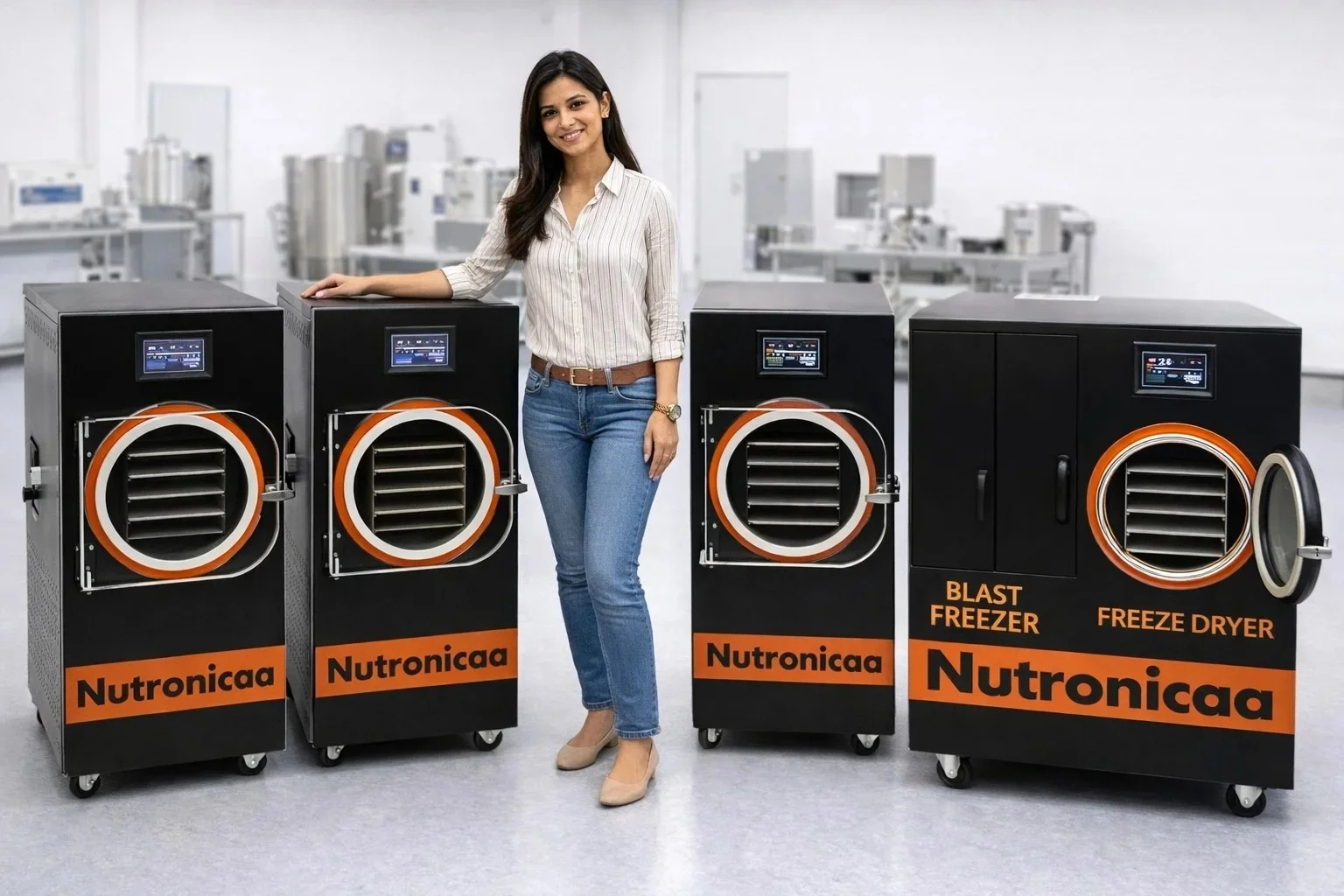
Freeze dryer machine designed for practical food processing and commercial use
1. What is a Small Freeze Dryer?
A small freeze dryer is generally suitable for product trials, pilot batches, early-stage experimentation, and low-volume production. It can be a useful option when the main goal is to understand process behaviour before moving to larger commercial output.
Small systems are often preferred by startups in the testing phase, product developers, and users who want to validate product acceptance before scaling further.
2. What is a Commercial Freeze Dryer?
A commercial freeze dryer is designed for regular production, better batch planning, larger tray area, and more practical long-term business use. It is the right direction when you already know your product category and intend to build a real processing business around it.
Commercial systems are more suitable for businesses targeting B2B supply, private label production, premium food categories, or repeated weekly output.
3. Small vs Commercial Freeze Dryer – Practical Comparison
4. How to Decide Which One is Right for You
Ask yourself these practical questions:
- Are you still testing products, or are you ready for regular production?
- Do you need only small output, or are you planning weekly or monthly commercial batches?
- Are you targeting local premium sales, B2B supply, or larger market expansion?
- Will the machine remain a trial tool, or become part of your business model?
If your goal is only experimentation, a smaller system may be sufficient. But if your goal is long-term production and market growth, commercial sizing becomes much more sensible.
5. Why Machine Selection Should Not Be Based Only on Budget
Many buyers look only at initial machine cost, but the right decision should also consider output requirement, batch turnaround, operating practicality, and future scaling. A lower-cost machine that cannot support your commercial target may actually become more expensive in the long run.
This is why capacity planning matters just as much as budget planning.
6. Pre-Freezing and Process Support Also Matter
Even the right freeze dryer will not perform properly if pre-freezing and process handling are ignored. For many commercial users, a proper blast freezer and correct pre-freezing process play a major role in improving consistency.
Read our guide on proper pre-freezing in freeze drying to understand why this matters.
7. Final Recommendation
If you are still in the testing phase, a smaller freeze dryer may help you validate product suitability. But if you already know your category and want to build a serious processing business, a commercial freeze dryer is usually the better long-term decision.
The best choice is not the smallest machine or the biggest machine — it is the machine that matches your actual business stage and realistic production goals.
Related Freeze Drying Resources
Talk to Nutronicaa Before You Decide
Whether you are starting with trials or planning commercial production, we can help you understand the practical difference between small and commercial freeze drying setups.
Get guidance on machine capacity, production planning, pre-freezing requirements, and suitability for your product category.