
How Freeze Drying Works
Freeze drying is a premium preservation process that removes moisture from food after freezing it, helping preserve structure, appearance, shelf life, and product quality far better than ordinary drying methods. This guide explains how the process works and why it is valuable for food businesses.
What this page will help you understand
- What makes freeze drying different from ordinary drying
- How freezing, vacuum, and sublimation work together
- The main stages of a freeze drying process
- Why pre-freezing and vacuum stability matter
- Why freeze-dried products look lighter and more premium
What Makes Freeze Drying Different?
Freeze drying is different from conventional drying because it does not depend on heat alone to remove moisture. Instead, the product is first frozen and then placed under vacuum so that ice converts directly into vapor through sublimation.
This allows the product to retain much more of its shape, structure, color, aroma, texture potential, and nutritional quality.
Why this matters
- Better shape and structure retention
- Better visual appearance in final product
- More premium texture and lighter feel
- Stronger product stability when packed correctly
- Higher value addition potential for food businesses
Freeze Drying Means Freezing First, Then Drying Under Vacuum
In simple terms, freeze drying is a process where the product is first frozen, pressure is reduced inside the chamber, and ice is removed as vapor instead of melting into liquid water.
This is the core reason why freeze-dried products look and behave differently from dehydrated products.
Freeze Drying in 3 Main Steps
This is the simplest way to understand the process at a glance.
Freezing
The product is brought to a frozen state so that internal moisture turns into ice and the structure is prepared for controlled drying.
Primary Drying
Vacuum is applied and the ice is removed through sublimation, which is the main stage of moisture removal.
Secondary Drying
Remaining bound moisture is reduced further to improve product stability, storage performance, and shelf life.
The 3 Main Stages of Freeze Drying Explained
Each stage plays a different role in achieving a stable, premium freeze-dried product.
Stage 1: Freezing
The product is frozen so that water inside it turns into ice. This stage prepares the product for moisture removal and strongly influences final structure and product quality.
Stage 2: Primary Drying
After freezing, vacuum is applied and controlled heat is introduced so that the ice changes directly into vapor. This is the main moisture removal stage.
Stage 3: Secondary Drying
After most visible ice is removed, the process continues to reduce remaining bound moisture and improve stability, storage performance, and shelf life.
What Is Sublimation in Freeze Drying?
Sublimation is the process in which ice changes directly into vapor without first becoming liquid water. In freeze drying, this is what allows moisture to leave the product while preserving much of the original structure.
This is one of the biggest differences between freeze drying and ordinary heat drying.
Why Vacuum Matters in Freeze Drying
Vacuum is essential because it lowers the pressure inside the chamber and creates the conditions needed for sublimation.
- Sublimation cannot happen efficiently without proper vacuum
- Vacuum stability supports process consistency
- Poor vacuum conditions can reduce drying quality
- Vacuum is a core part of freeze dryer performance
Why Proper Pre-Freezing Improves Freeze Drying
For commercial freeze drying, pre-freezing is not a small detail — it strongly influences both product quality and process practicality.
Better Product Appearance
Rapid and controlled freezing helps preserve structure more effectively and supports a better final product look.
Smoother Workflow
Using a blast freezer before freeze drying makes loading and batch planning more practical for serious commercial use.
Better Batch Preparation
Pre-frozen product enters the freeze drying stage more consistently, which supports better process handling overall.
What Happens Inside a Freeze Dryer?
Inside the machine, the process is controlled step by step so moisture can leave the product without collapsing its structure.
Product Is Loaded
The product is placed on trays in the chamber after preparation and freezing, or it may be loaded in a suitable pre-frozen condition.
Chamber Is Sealed
The machine chamber is closed so a controlled low-pressure process environment can be created.
Vacuum & Condensation Begin
Vacuum is created and the condenser captures removed moisture while controlled shelf heating supports sublimation.
Dry Stable Product Is Reached
Moisture leaves the product gradually until the final dry condition needed for storage and packaging is achieved.
Why Freeze-Dried Foods Retain Better Shape and Appearance
Because moisture is removed from frozen product under vacuum, the structure is preserved more effectively than in heat-based drying.
This is why freeze-dried foods often appear lighter, more porous, less collapsed, better shaped, and more premium in presentation.
Visible product differences
- Lighter and more open structure
- Better shape retention
- More premium visual appeal
- Reduced collapse compared to conventional drying
- Better suitability for differentiated food products
Common Products Suitable for Freeze Drying
Freeze drying can be used for many food categories where shelf life, appearance, and premium quality are important.
Fruits
Strawberry, mango, banana, pineapple, apple, chikoo, papaya and other high-value fruits.
Vegetables
Peas, corn, carrot, beetroot, onion, garlic and similar products for ingredient or retail use.
Herbs
Mint, coriander, tulsi, curry leaves and other sensitive products needing better preservation.
Specialty Products
Coffee, powders, ready meal components, dairy-based items, and innovative premium formats.
Typical Freeze Drying Time
Freeze drying is not an instant process. Batch time depends on product type, moisture content, slice thickness, load volume, pre-freezing quality, and machine performance.
A typical food batch may take many hours, and commercial planning should always consider full process time rather than just loading time.
Why Freeze Drying Creates a Premium Category
Freeze drying is used when the goal is not just preservation, but quality preservation.
- Better product appearance
- Stronger shelf life
- Premium product positioning
- Higher value addition potential
- Specialty food and differentiated branding opportunities
Freeze Drying Is Not the Same as Ordinary Drying
Many first-time buyers assume freeze drying is simply a more advanced dryer. In reality, it is a different preservation method with a different process path, different equipment needs, and a different final product category.
This is why freeze-dried foods are generally positioned and valued differently in the market.
How Nutronicaa Supports Freeze Drying Applications
Our approach is to help buyers understand freeze drying practically — not just technically.
Process Clarity
We help buyers understand how freeze drying works in practical terms so machine selection becomes more meaningful.
Workflow Guidance
We guide buyers on freeze dryer + blast freezer workflow for better commercial planning and better product outcomes.
Application-Based Support
As an Indian manufacturer, we support startup and commercial buyers based on actual application needs and realistic use cases.
Frequently Asked Questions
Some of the most common questions asked by people trying to understand the freeze drying process.
What is freeze drying?
Is freeze drying the same as dehydration?
Why is vacuum used in freeze drying?
Why is pre-freezing important?
What foods can be freeze dried?
Why do freeze-dried foods look lighter and more premium?
Explore Nutronicaa Freeze Dryer Models
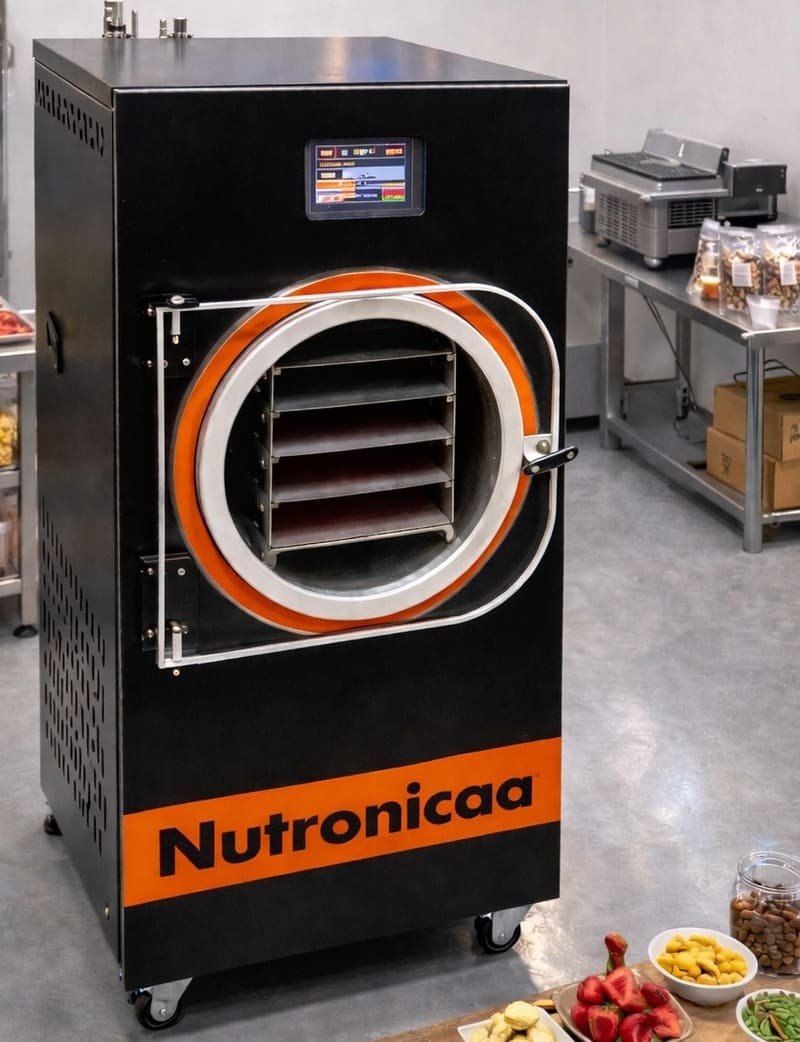
NT-4T Freeze Dryer
Compact freeze dryer suitable for product trials and small-batch food product development.
View Product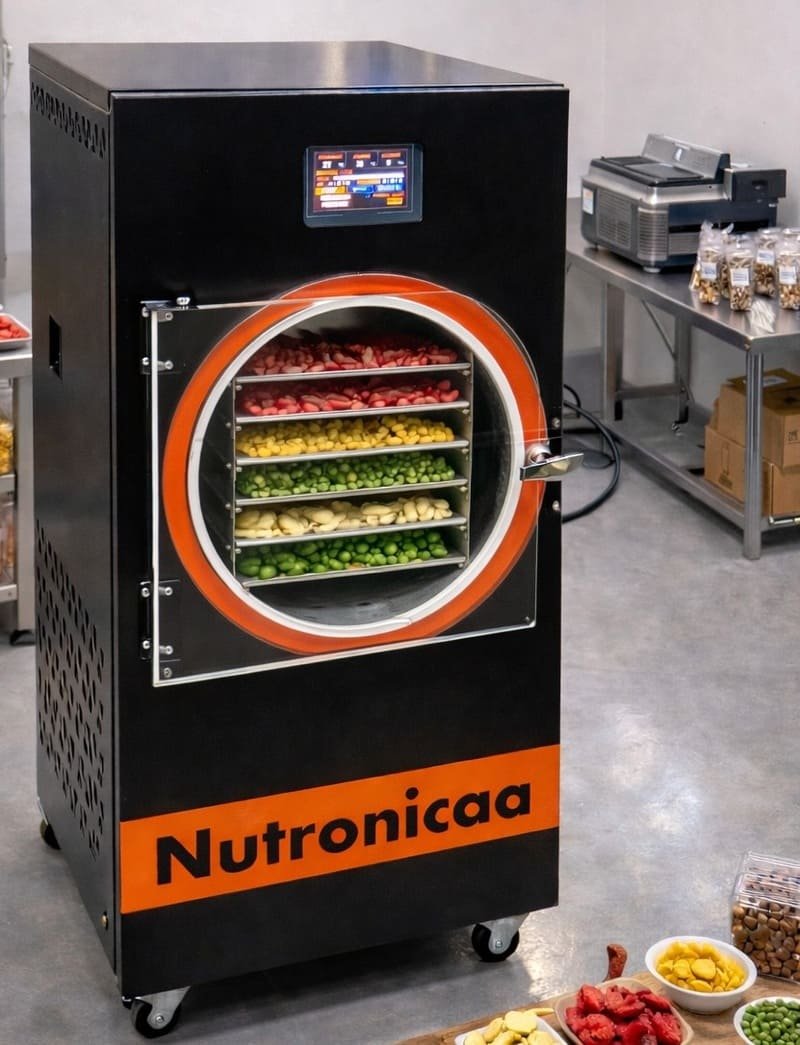
NT-5T Freeze Dryer
Startup-friendly freeze dryer designed for small commercial freeze-dried food production.
View Product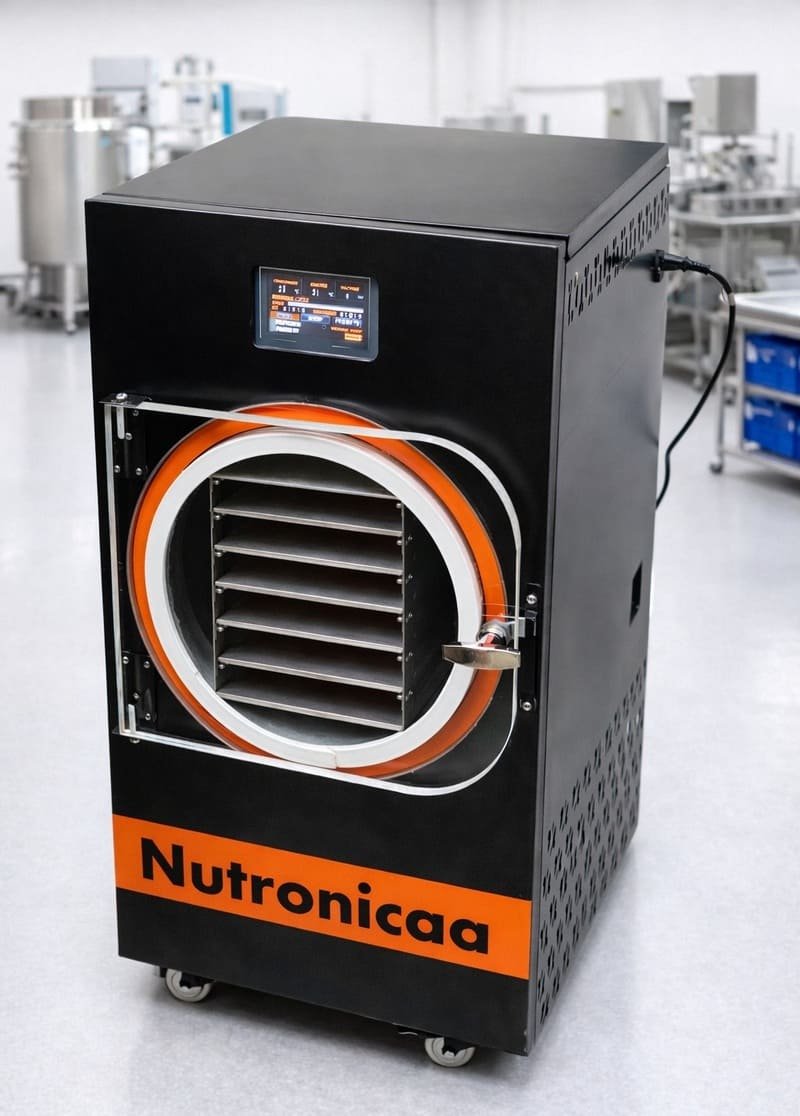
NT-6T Freeze Dryer
Higher capacity freeze dryer suited for growing food businesses and larger batch processing.
View Product
NT-Combo Lyo
Integrated blast freezer and freeze dryer system designed for structured freeze-drying workflow.
View ProductWant to Understand Freeze Drying More Practically?
If you are exploring freeze drying for food processing, product development, or commercial startup planning, Nutronicaa can help you understand the right machine and workflow based on your application.