
Freeze drying vegetables is one of the most commercially relevant applications in value-added food processing. It offers the possibility of converting perishable vegetables into lightweight, shelf-stable, premium products that can be used in soups, instant foods, ready mixes, meal kits, institutional supply, export products, convenience foods, and specialized ingredient segments.
Compared to conventional hot air drying, freeze drying can preserve color, structure, and ingredient identity much more effectively. This makes the final product more attractive for premium buyers who care about visual quality, ingredient recognition, cleaner rehydration, and better product presentation.
At the same time, vegetable freeze drying is not a one-size-fits-all process. Different vegetables behave very differently. Some products dry well and rehydrate effectively, while others may require pretreatment, blanching, size control, or process tuning. That is why this segment needs both technical understanding and commercial clarity.
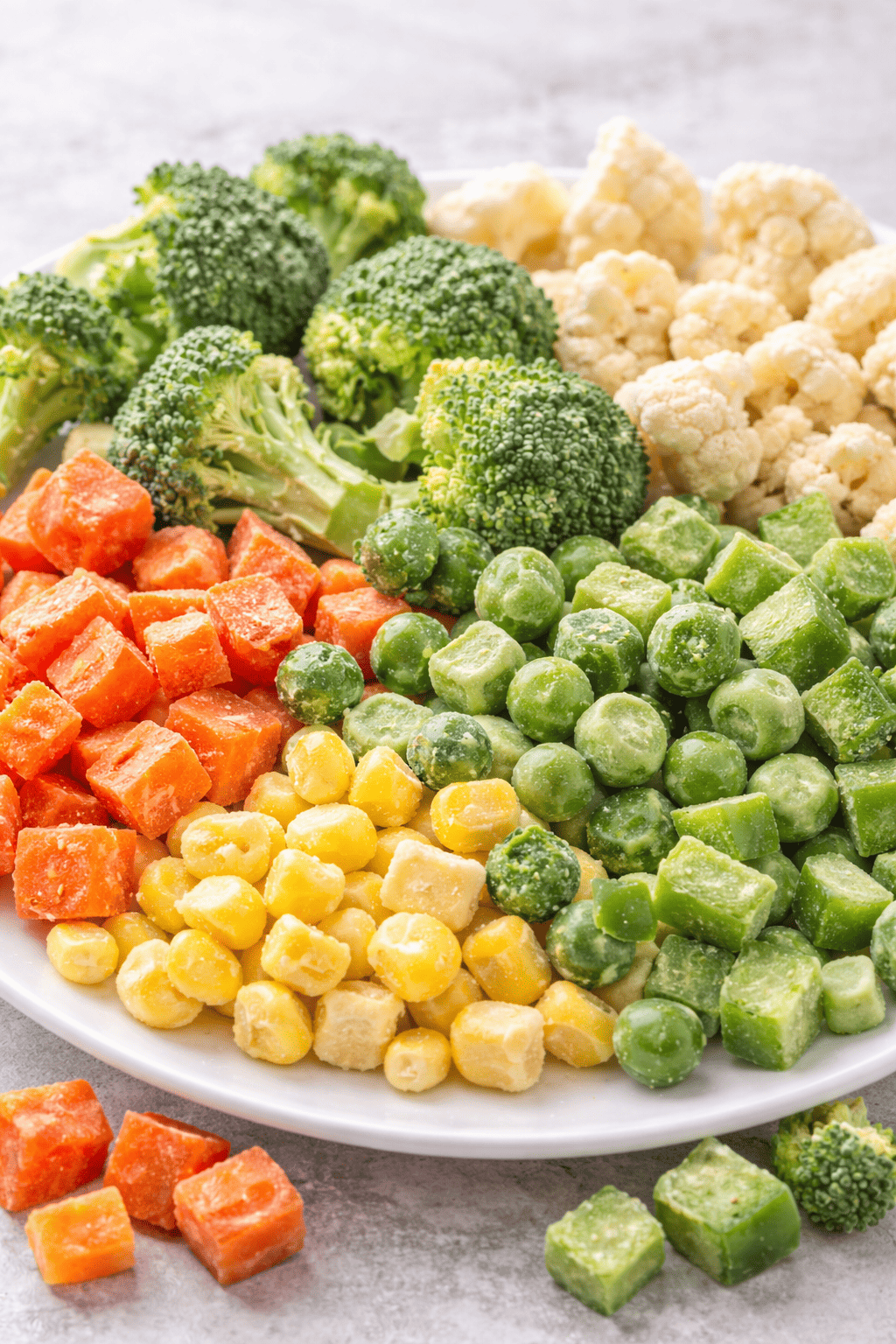
Freeze dried vegetables can offer strong visual appeal, low moisture storage stability, and premium ingredient positioning when processed correctly.
What Is Freeze Drying of Vegetables?
Freeze drying of vegetables is a process in which fresh or pretreated vegetables are first frozen and then dried under vacuum so that the frozen water inside the product is removed by sublimation. Instead of using high heat to drive out water in liquid form, freeze drying removes moisture more gently while the product remains in a frozen state during the main drying phase.
This is especially useful for vegetables where structure, color, ingredient identity, and rehydration behavior are important. In hot air drying, many vegetables shrink significantly or lose their fresh-looking visual quality. In freeze drying, the final product can remain more recognizable and better suited for premium food applications.
In simple terms: freeze dried vegetables are designed to be lighter, lower in moisture, easier to store, and more premium in appearance than many conventionally dried vegetable formats.
Which Vegetables Are Commonly Considered for Freeze Drying?
A wide range of vegetables can be considered for freeze drying, but not all vegetables behave identically. Product shape, cellular structure, sugar content, starch content, fiber content, water content, and cooking or blanching history can all affect the final result.
Peas & Corn
Often attractive for instant food and mixed vegetable applications because of size consistency and broad usage.
Carrot
Popular in mixes, soups, meal kits, and ingredient applications due to color and familiarity.
Broccoli / Beans
Useful for premium vegetable mixes and ready-to-cook or convenience meal categories.
Mixed Vegetable Blends
Commercially attractive when the final use is soups, noodles, meal packs, dry mixes, or institutional products.
Why Freeze Dried Vegetables Are Commercially Attractive
Vegetables are widely used across food categories, which makes them commercially versatile. Unlike some premium snack-only products, freeze dried vegetables can fit into many business models including retail packs, foodservice ingredients, B2B supplies, institutional products, dry meal kits, soups, and export ingredients.
- Useful in soups, noodles, instant foods, and ready mixes
- Can support ingredient supply to food manufacturers
- Suitable for premium mixed vegetable blends
- Relevant for convenience food and long shelf life products
- Useful in export-oriented dried ingredient formats
- Can create higher value addition than low-end conventional drying in selected categories
Why Vegetable Freeze Drying Is Not Always Simple
Many people assume vegetables are easier than cooked foods and therefore automatically simple to freeze dry. While vegetables are generally more manageable than complex cooked meals, they still require careful handling. Some vegetables need size reduction, some require blanching, and some may show color or texture issues if the process is not controlled properly.
Vegetables also vary in density and moisture distribution. For example, peas, beans, broccoli, carrots, and cauliflower do not all respond in the same way during freezing, sublimation, or rehydration. Mixed vegetable products are even more challenging because multiple components are being processed together.
Practical point: good results come from selecting the right vegetables, preparing them correctly, and understanding how the final product will actually be used by the customer.
Step-by-Step Freeze Drying Process for Vegetables
Freeze drying vegetables involves more than simply loading raw produce into a machine. Product preparation, size control, pretreatment, freezing quality, and drying consistency all influence the commercial success of the final product.
1. Raw Material Selection
Start with fresh, clean, good-quality vegetables. Raw material quality strongly influences color, appearance, and overall premium value.
2. Washing and Cleaning
Remove soil, dust, damaged pieces, and impurities. This step is essential for both hygiene and product consistency.
3. Cutting / Sizing
Vegetables should be cut into consistent sizes. Uniformity matters because uneven pieces dry unevenly and may create poor product appearance or variable rehydration.
4. Pretreatment or Blanching (If Required)
Some vegetables may benefit from blanching or pretreatment depending on enzyme activity, color sensitivity, or final use. This should be decided product by product.
5. Pre-Freezing
Prepared vegetables are frozen before vacuum drying. Good freezing is important because it supports better structural preservation and more effective sublimation.
6. Tray Loading
Vegetables should be loaded in controlled depth and spread evenly. Proper tray loading helps improve consistency and batch performance.
7. Primary Drying Under Vacuum
The frozen moisture is removed through sublimation under vacuum. Stable vacuum, efficient condenser performance, and controlled heat input are essential.
8. Secondary Drying
Residual moisture is reduced further to improve shelf stability. This step matters greatly for storage performance and final product behavior.
9. Packaging
Freeze dried vegetables must be packed promptly in moisture-barrier packaging to protect crispness, quality, and shelf life.
Key Technical Factors That Affect Final Quality
Freeze dried vegetables may appear visually simple, but final quality depends heavily on process discipline. Product size, pretreatment, freezing quality, vacuum integrity, and packaging all influence the result.
| Process Factor | Why It Matters |
|---|---|
| Raw material freshness | Affects color, appearance, and premium quality perception |
| Size consistency | Helps improve batch uniformity and product presentation |
| Blanching / pretreatment | Can influence color retention, enzyme stability, and final use behavior |
| Vacuum stability | Poor vacuum can reduce drying efficiency and consistency |
| Condenser performance | Necessary for vapor capture and stable drying performance |
| Packaging discipline | Essential for protecting final low-moisture product from ambient humidity |
Why End Use and Rehydration Matter
The success of a freeze dried vegetable product depends heavily on where and how it will be used. A vegetable intended for soup, instant noodles, ready mixes, or meal kits does not need to behave exactly like one intended for premium retail snacking or garnish applications.
Rehydration behavior can vary widely. Some vegetables regain acceptable softness and structure quickly, while others may require more controlled rehydration or may work better in cooked applications rather than direct hydration use. That is why product development should always be linked to the intended market and end-user application.
Important commercial point: the best vegetable product is not always the one that looks good on the tray, but the one that performs well in the customer’s actual food application.
Advantages of Freeze Drying Vegetables
| Factor | Freeze Drying Benefit |
|---|---|
| Appearance | Better visual identity and premium product presentation |
| Shelf life potential | Strong storage stability when moisture and packaging are controlled |
| Weight reduction | Useful for easier transport and convenience food applications |
| Ingredient flexibility | Suitable for mixes, soups, meal kits, and B2B ingredient supply |
| Value addition | Can support premium positioning in selected markets and applications |
Challenges and Limitations to Understand Honestly
Technical Challenges
- Different vegetables behave differently during drying
- Some products need pretreatment or blanching
- Mixed vegetables may dry unevenly
- Rehydration performance varies by product and application
- Batch consistency requires process discipline
Commercial Challenges
- Higher equipment investment than conventional drying
- Not every vegetable justifies premium positioning
- Packaging quality is non-negotiable
- Business success depends on real end-use demand
- Low-value market segments may not reward the added processing cost
Business Potential in India
Freeze dried vegetables offer meaningful business potential in India, particularly in categories where quality, convenience, and shelf stability create clear value. The strongest opportunity is usually not in replacing all traditional vegetable supply, but in serving targeted premium applications where appearance, convenience, controlled moisture, and longer shelf life matter.
This includes B2B ingredient supply, instant foods, soups, ready mixes, meal kits, export ingredients, institutional products, and premium branded vegetable blends. Businesses that understand the application side can often position vegetables more effectively than those who only think in terms of drying technology alone.
- Instant noodles and soup ingredient brands
- Meal kit and convenience food businesses
- Food manufacturers requiring dry vegetable inclusions
- Premium retail mixed vegetable products
- Export-oriented processed ingredient supply
- Institutional or specialized food pack applications
Who Should Consider This Segment?
Suitable For
- Food processors targeting ingredient supply
- Brands building convenience food products
- Businesses serving B2B food manufacturing clients
- Processors exploring export-friendly vegetable formats
- Commercial users with application-focused market strategy
Not Ideal For
- Buyers looking only for low-cost bulk drying
- Businesses with no clarity on end use
- Operators unwilling to standardize product preparation
- Markets that do not value premium or specialized ingredient quality
Final Recommendation
Freeze drying vegetables can be a strong commercial segment when it is approached with the right combination of product selection, process control, packaging quality, and market understanding. It is especially attractive for applications where ingredient identity, shelf stability, and premium presentation matter.
However, success in this category does not come from drying vegetables blindly. It comes from choosing the right products, preparing them properly, validating how they will be used, and aligning the final output with a real market need.
- Select vegetables with real application demand
- Standardize cutting, pretreatment, and batch preparation
- Maintain strong vacuum and drying consistency
- Test the product in its intended final use
- Support the product with proper moisture-barrier packaging
Planning to Explore Freeze Drying of Vegetables?
If you are evaluating this segment, it is important to understand vegetable suitability, pretreatment requirements, batch structure, drying consistency, and real commercial use before scaling up.
Nutronicaa manufactures freeze drying systems designed for Indian operating conditions, with a focus on practical usability, stable vacuum performance, and serious application-oriented support.